
How the job is done
- 1
Check the floor
Hardwood or LVP, finish still on it, no wax or problem cleaners
- 2
Screen the old finish
A buffer dulls the old coat so the new one can grip
- 3
Vacuum and tack
Until the floor is spotless
- 4
Roll on the finish
A two-part, water-based urethane, with a roller on a pole
- 5
Walk through it
Show the homeowner the floor, go over care, and take payment
One person can do an average home in about 3 hours. It works on solid hardwood, engineered and factory-prefinished floors, and on LVP (test a spot first). It is not for laminate, sheet vinyl or painted floors.
How soon the family can use the floor
24 hours
Walk on it in socks
About 3 days
Furniture back
About 7 days
Fully cured, rugs back
The family stays home the whole time. There's no sanding dust to clean out of the vents, and no week in a hotel.
Recoat vs. sand and refinish
The full recoat vs. refinish comparison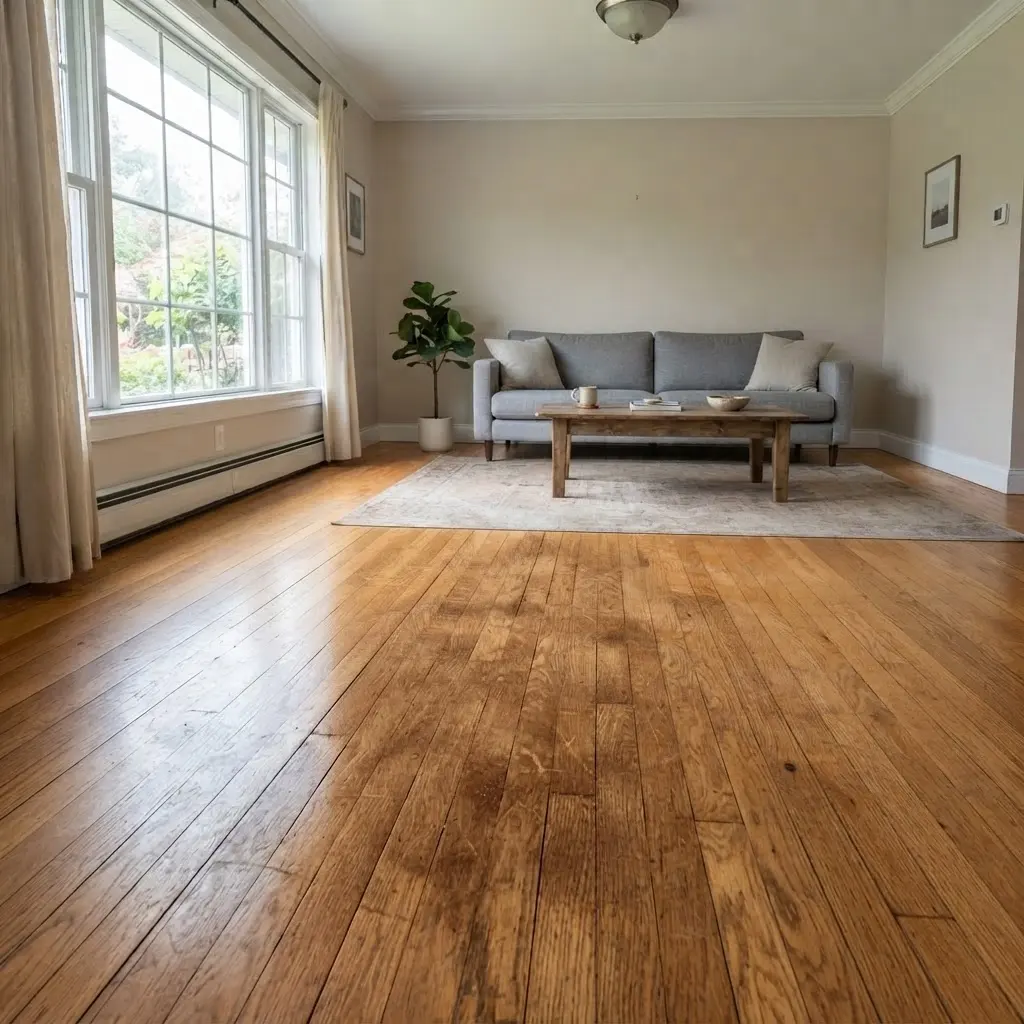
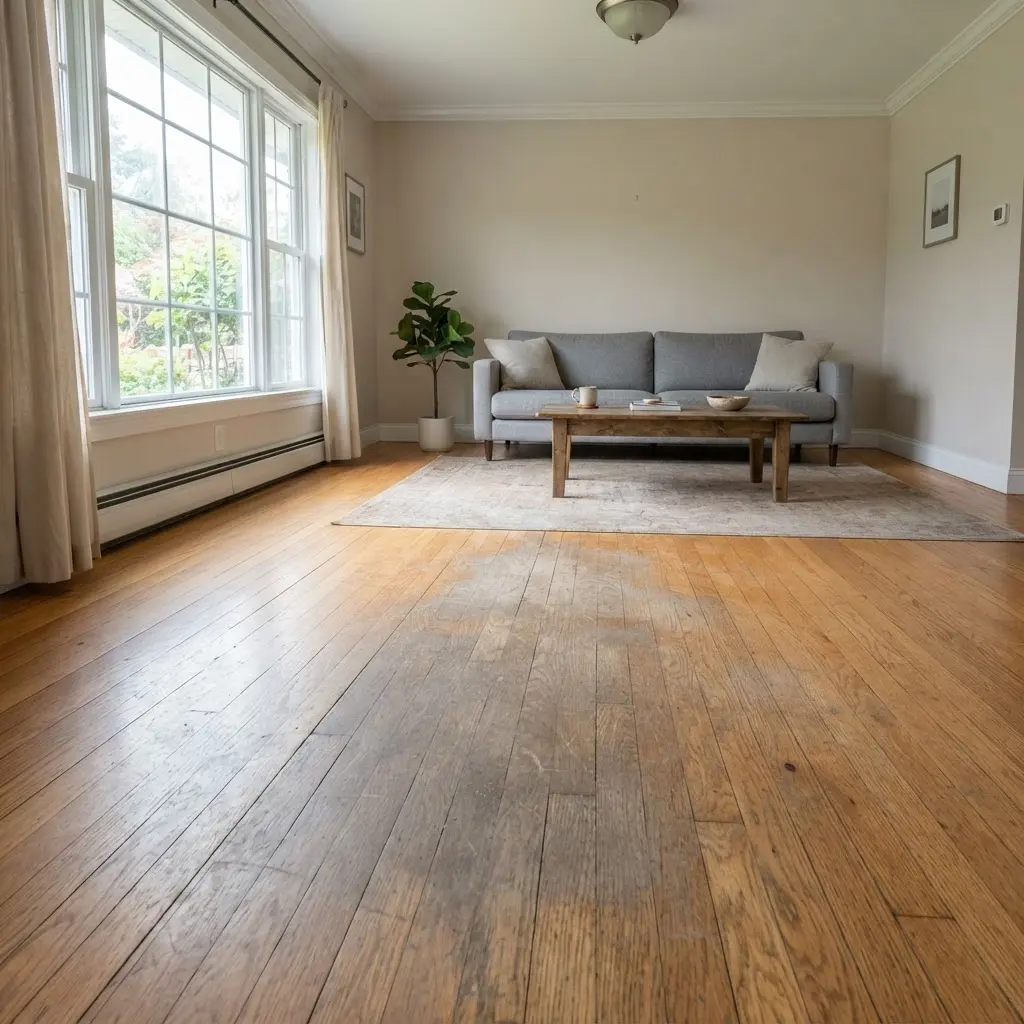 BeforeAfter
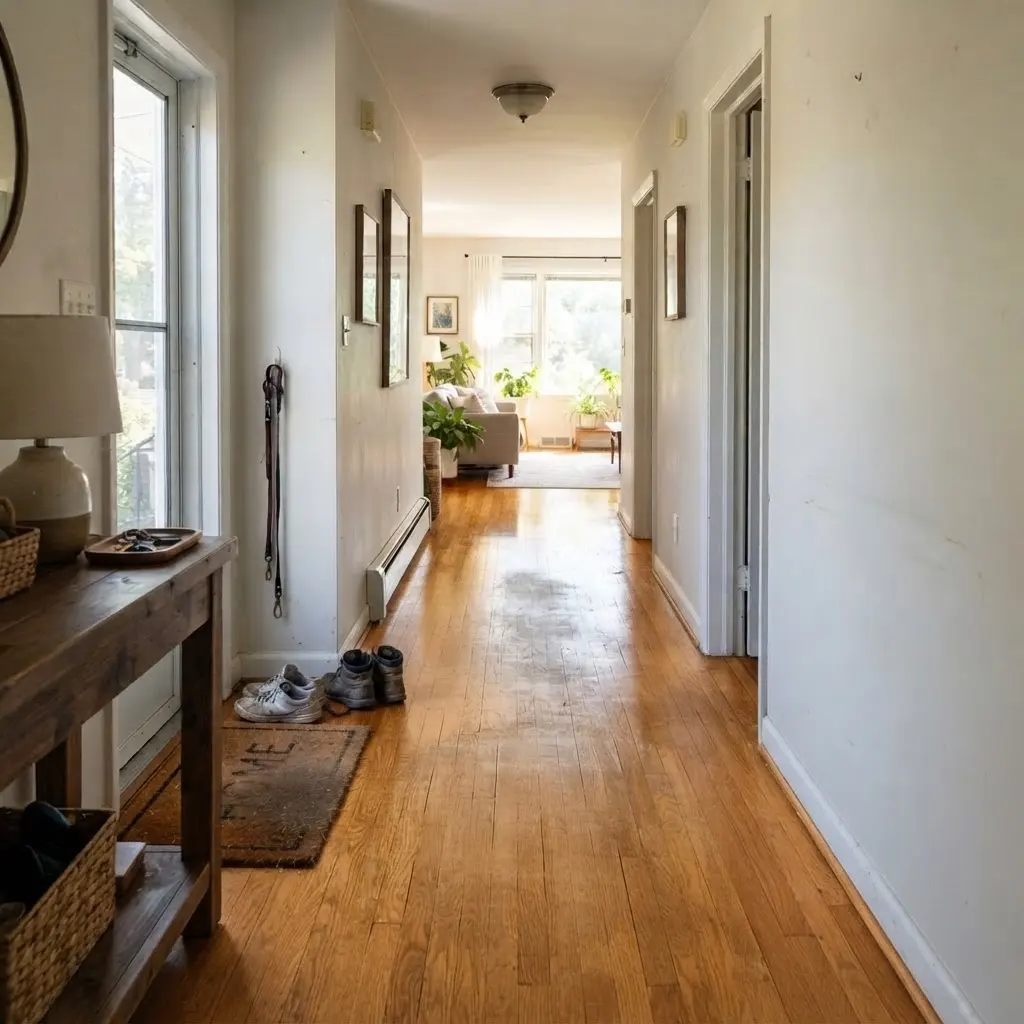
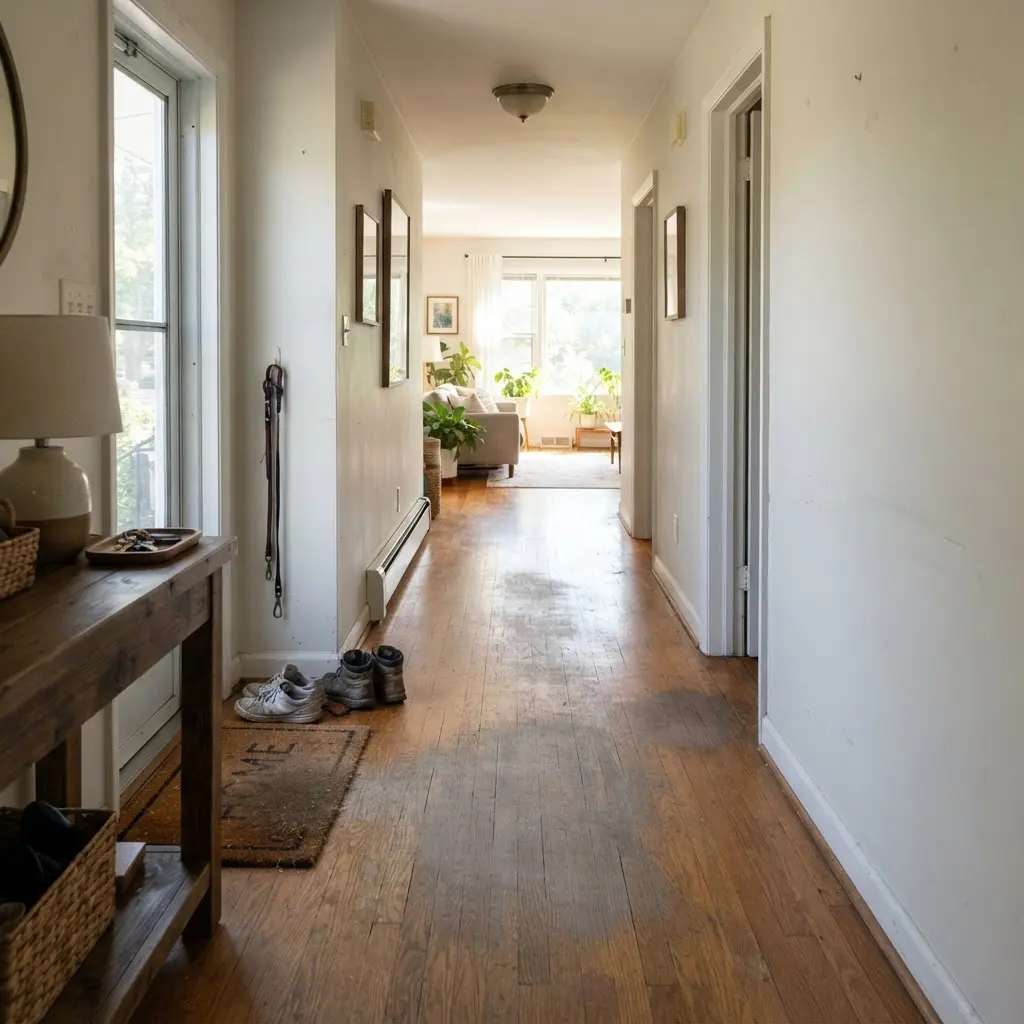 BeforeAfter
Illustrative images. Results depend on the condition of the floor.
What it fixes, and what it doesn't
- Fixes: brings back the shine
- Fixes: evens out dull traffic lanes
- Fixes: blends in light scratches in the finish
- Fixes: adds years of protection
- Doesn't fix: scratches that go into the wood
- Doesn't fix: bare gray spots or pet stains in the wood
- Doesn't fix: the color. A recoat can't change it
Those floors need a full sand, and we teach you to say so up front.
The finish
The finish is a two-part, water-based urethane, made under the FloorIt label in Cabot, Arkansas. Part A is the finish, and Part B is a hardener you mix in on the job. It hardens chemically and bonds to the screened floor, so it becomes part of the old finish instead of sitting on top. It stays clear and won't yellow, it cleans up with water, and the odor is mild.
That's the difference from the store. Polish is a film that sits on top and peels. One-part poly has no hardener, so it stays softer and chips.
Why it sells
Homeowners commonly pay $1.50 to $3 a square foot for a recoat, against $3 to $8 for a full sand and refinish. It's done in an afternoon, and the family stays home. Every happy customer is also a referral to the neighbors.
Most homeowners have only heard of a full sand or new floors. When they learn they can have the shine back by dinner, without moving out, the choice is easy. Your job at the estimate is to check the floor honestly and explain the options.
Every customer goes on a yearly maintenance plan, so every happy customer is a future job.