
How Many Coats Does a Floor Recoat Need? One Coat vs Two
October 23, 2026 · FloorIt Insights
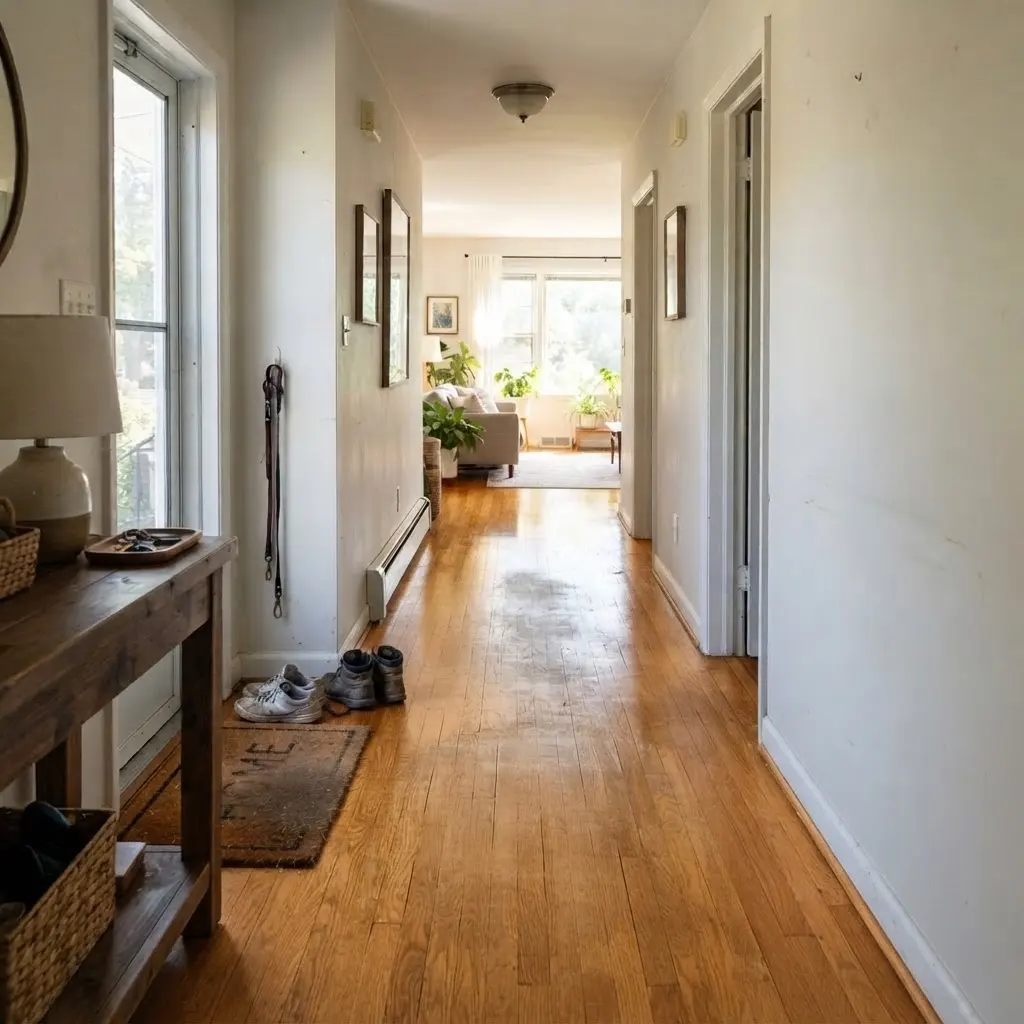
A floor recoat takes one coat or two. One coat is enough when the floor is in good shape and just needs a new wear layer and its sheen back. Two coats are for dry, worn traffic lanes, where the first coat soaks in and the second evens out the sheen. The manufacturer puts it at roughly 40 to 60% of jobs that need only one. Here is how to tell which floor you have, and how to price and plan each.
When one coat is enough
A one-coat floor is in decent shape. The finish is scuffed and dull, but it is still all there. It needs a new wear layer on top and its sheen back, and that is it.
Factory-prefinished floors often take one coat. So does LVP: a maroon pad, then one coat.
One coat is about 3 hours of work for one person on an average floor. The FloorIt job math is built on one coat.
When the floor needs two
Some floors have dry, worn paths: the walkway from the front door, the path to the kitchen, the spot in front of the couch. The finish there is thin, and sometimes the wear has reached the color.
Those spots are thirsty. The first coat soaks into them and they still look different from the rest of the room. The second coat brings the whole floor to one even sheen. Think of painting a wall: the first coat covers, the second makes it look right.
Site-finished floors often take two coats. If the wear has reached the color in the traffic lanes, those spots get a color touch-up before any coat goes on.
How to tell at the estimate
Walk the floor in good light, and look at it from low angles toward a window.
- An even dull across the room, no thin paths: plan one coat.
- Clear paths where the finish looks dry or thin next to shinier edges: plan two coats.
- Wear into the color in the traffic lanes: color touch-up, then two coats.
- Gray, bare wood: not a recoat. That floor needs a full sand.
Doing the second coat
Water-based finishes allow two to three coats in a day. Oil-based finishes allow about one. That is one reason a water-based recoat finishes in a day.
The first coat is dry in about 2 to 4 hours. Once it is dry, lightly abrade it with a maroon pad, vacuum and tack, then roll on the second coat the same way you did the first.
Keep each coat full. Roll at the rated coverage and never spread it thin to stretch a gallon. Thin coats wear out early, and a coat that is too thin is one of the causes of an early failure the manufacturer has seen.
Two coats as your premium option
Two coats protect better. The manufacturer calls two coats standard in the buff and coat market, and it gives you a line that builds trust: 'We don't just do one coat.'
So build it into your pricing. Quote one coat for a floor that only needs one, and offer two coats as the premium tier, especially for worn traffic lanes. Small areas of 200 to 400 square feet usually carry a minimum price. Bigger homes can get price tiers for one coat and two.
Put the number of coats on the written quote. The homeowner should know what they are paying for, and you should never be the one who decided on the job that it needs a second coat you did not price.
Planning the finish for each
FloorIt Two-Part Finish covers about 500 to 600 square feet a gallon. An average 1,000 square foot floor takes about 1.8 gallons for one coat, about $236 of finish. A second coat adds about the same again.
Mixed finish stays usable for about 8 hours. On a two-coat day, you can mix for the first coat, then mix fresh for the second once the first is dry. Only mix what each coat needs.
Keep a spare gallon in the van. Running short in the middle of a room is how lap marks happen.
Write the plan down before job day: square feet, number of coats, gallons for each coat. When you know the numbers going in, you mix the right amount, you do not waste finish, and you do not end up a gallon short with a wet edge drying behind you.
What the homeowner sees
A one-coat floor gets its shine and protection back. A two-coat floor on worn lanes gets that plus an even sheen across the room, so the paths stop showing.
Either way, the family does not have to leave home. They stay out of the room while each coat goes on and dries. Socks are fine at 24 hours after the last coat.
Common questions
- Is one coat of finish enough for a recoat?
- Often, yes. If the floor is in good shape and just needs a new wear layer and its sheen back, one coat does it. The manufacturer puts that at roughly 40 to 60% of jobs.
- Why would a recoat need two coats?
- Dry, worn traffic lanes soak up the first coat. The second coat brings the whole floor to one even sheen and adds protection.
- How long between coats of water-based floor finish?
- About 2 to 4 hours, once the first coat is dry. Lightly abrade it with a maroon pad, vacuum and tack, then roll on the second coat.
- Do factory-prefinished floors need two coats?
- Often not. Factory-prefinished floors often take one coat after a thorough screen. Site-finished floors with worn traffic lanes are the ones that more often need two.
- How many coats does LVP need?
- One. Lightly scuff it with a maroon pad, then roll on one coat. Test a spot first.
- How much finish does a second coat use?
- About the same as the first. An average 1,000 square foot floor takes about 1.8 gallons a coat.
Ready to bring the recoat to your city?
One partner per area. Check if yours is open.
More Insights
How Many Homes Have Hardwood Floors? What It Means for a Recoat Business
October 17, 2026
A Home Service Business That Stays Busy in Winter: 5 Years of Data
October 17, 2026
Hardwood Floor Demand Calculator: How to Read Your Area's Report
October 17, 2026
An Add-On Service for Home Service Companies: Why Owners Add Recoats
October 17, 2026
How to Recoat Hardwood Floors, Step by Step: All 7 Stages of a Job
October 17, 2026
Facebook Ads for Flooring: Cost per Lead, per Estimate and per Job
October 17, 2026