Add-On Services for a Carpet Cleaning Business: How to Pick the Right One
October 23, 2026 · FloorIt Insights
The best add-on service for a carpet cleaning business sells to the customers you already have, in the homes you already walk into, at a bigger ticket than your main job. Upholstery, area rugs, tile and grout, and pet odor work are the usual picks, and hardwood floor recoats are the one most carpet cleaners walk right past. This post gives you a simple test for any add-on, goes through the common ones, and shows why the wood floor in the next room is often the biggest ticket in the house.
Why carpet cleaners add services at all
A carpet cleaning business has a hard ceiling. You can only clean so many rooms in a day, and every customer only needs you once or twice a year. Your truck, your name and your customer list are already paid for. An add-on lets you earn more from each visit without buying a new customer.
There is a second reason. Many of the homes you clean have wood floors in other rooms, and nobody thinks to ask the carpet cleaner about them. One carpet cleaner who talked with us put it this way: his van says carpet cleaning, and that is all people see. An add-on changes what customers think you can do.
A five-question test for any add-on
Before you buy equipment or print a new flyer, run the add-on through these five questions. A good add-on passes at least four of them.
- Same customer: does the person who books your carpet cleaning also buy this?
- Same visit or same week: can you sell it while you are already in the home, or book it for the next trip?
- Bigger ticket: does one job pay more than your average carpet job, not less?
- Low startup cost: can you rent the big equipment at first instead of buying it?
- Learnable fast: can you or a tech learn it in days, not years, without risking the customer's home?
The common add-ons, and how they score
Here is how the usual choices stack up against that test. Prices vary too much by market to list here, so look at what other companies near you charge before you decide.
- Upholstery cleaning: same customer and same visit, uses the gear you already own. The ticket is usually small, so it adds to a job more than it creates one.
- Area rug cleaning: same customer, often a pickup and drop-off. It needs space to wash and dry rugs, which adds overhead.
- Tile and grout cleaning: same customer, and many carpet machines can do it with the right tool. It is a solid add-on, but it is still a cleaning ticket.
- Pet odor and stain treatment: easy to sell when you can smell the problem. It is usually an upcharge on a carpet job, not its own job.
- Hardwood floor recoats: same customer and same homes, but a much bigger ticket. Homeowners commonly pay about $1.50 to $3 a square foot, so a 1,000 square foot floor runs about $1,500 to $3,000. One person does an average floor in about 3 hours.
Why the wood floor in the next room is the big one
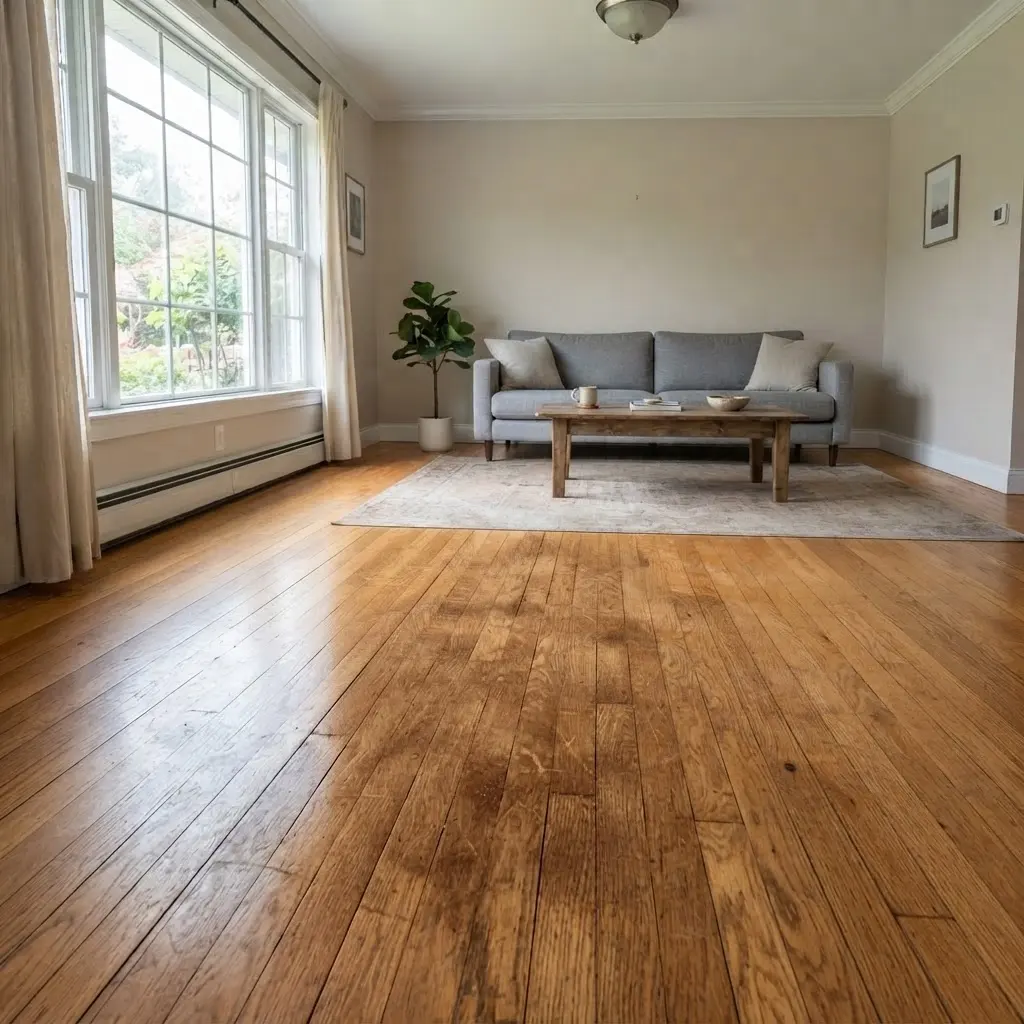
Walk through any home you clean. If the living room is carpet, the hallway, dining room or bedrooms are often wood. Many of those floors are dull and scratched in the walkways. Most homeowners think they only have two choices: sand the floor down, or tear it out. A full sand and refinish runs about $3 to $8 a square foot and keeps the family out of the room for days. A new floor costs far more.
A buff and recoat is the third choice most of them have never heard of. The tech screens the old finish with a floor buffer so the new coat can grip, vacuums and tacks the dust, then rolls on a fresh coat. No sanding down to bare wood, and the family stays home. You are the one who can tell them it exists, because you are already standing on the floor.
One cleaning operator told us that being in houses every day, he kept seeing floors that needed exactly this. Another said it felt like stepping on money. That is the whole idea of a good add-on.
What one recoat job can look like
Here is the job example we use across this site. An average job of $2,499 costs about $236 in finish, about $40 for the buffer rental and about $250 in marketing to win it. That leaves about $1,973 before your labor and taxes. That is an example, not a promise. Your prices and costs will differ.
When the customer already knows you from a carpet job, you may not spend that $250 on marketing at all. That is why existing customers are the first place to look.
What carries over from carpet work, and what does not
A lot of what makes you good at carpet cleaning makes you good at recoats. You already protect the home, show up on time and explain the work in plain words. You know how to move furniture without scuffing walls. You already have a vehicle and a calendar full of homeowners.
Some things are new. You have to learn which floors a recoat cannot fix: wood worn through to gray, bare spots, deep gouges, pet stains soaked into the wood, and floors coated in wax or store polish. You have to learn the prep, because almost every failed recoat comes down to prep. And you need to check that your insurance covers floor finishing, not just cleaning.
Start with the list you already have
The cheapest jobs you will ever win come from your own customer list. Send one short message to past customers: do you have wood floors that look dull or scratched? Ask the ones who say yes for a photo of the worst spot. Book the estimate with the ones whose floors qualify.
Have your techs note every wood floor they see on carpet jobs. Each one is a warm lead you did not pay for. Before and after photos from your first few jobs will sell the next ones better than any flyer.
Same name, or a new brand?
Some owners put recoats under the carpet name. Others want a separate brand for floors, so homeowners see a floor company, not a carpet company that also does floors. Both can work. A separate name makes sense if your ads and website will speak only to people with wood floors.
FloorIt builds a recoat business in your own name, with its own website, Google profile, phone and CRM, and runs ads to bring you your first 50 leads. It is not a franchise, so there is no royalty on your jobs. If you already run a carpet business, ask on the call how a floor brand fits next to it.
Common questions
- What is the most profitable add-on for a carpet cleaner?
- It depends on your market, but hardwood floor recoats usually carry the biggest ticket. Homeowners commonly pay about $1.50 to $3 a square foot, about $1,500 to $3,000 on a 1,000 square foot floor.
- Can I use my carpet cleaning equipment for recoats?
- No. A recoat needs a floor buffer with screens, a vacuum, a roller on a pole and a two-part finish. The buffer can be rented at first.
- Do carpet cleaning customers buy floor recoats?
- Many do, because the same homes often have wood floors in other rooms. Most homeowners have never heard a recoat exists, so you are offering a choice they did not know they had.
- Should tile and grout cleaners add recoats too?
- They can. The test is the same: same customer, bigger ticket, low startup cost and a job that can be learned fast.
Ready to bring the recoat to your city?
One partner per area. Check if yours is open.
More Insights
How Many Homes Have Hardwood Floors? What It Means for a Recoat Business
October 17, 2026
A Home Service Business That Stays Busy in Winter: 5 Years of Data
October 17, 2026
Hardwood Floor Demand Calculator: How to Read Your Area's Report
October 17, 2026
An Add-On Service for Home Service Companies: Why Owners Add Recoats
October 17, 2026
How to Recoat Hardwood Floors, Step by Step: All 7 Stages of a Job
October 17, 2026
Facebook Ads for Flooring: Cost per Lead, per Estimate and per Job
October 17, 2026