
What Grit Screen for a Screen and Recoat? Screens, Pads and the Buffer
October 23, 2026 · FloorIt Insights
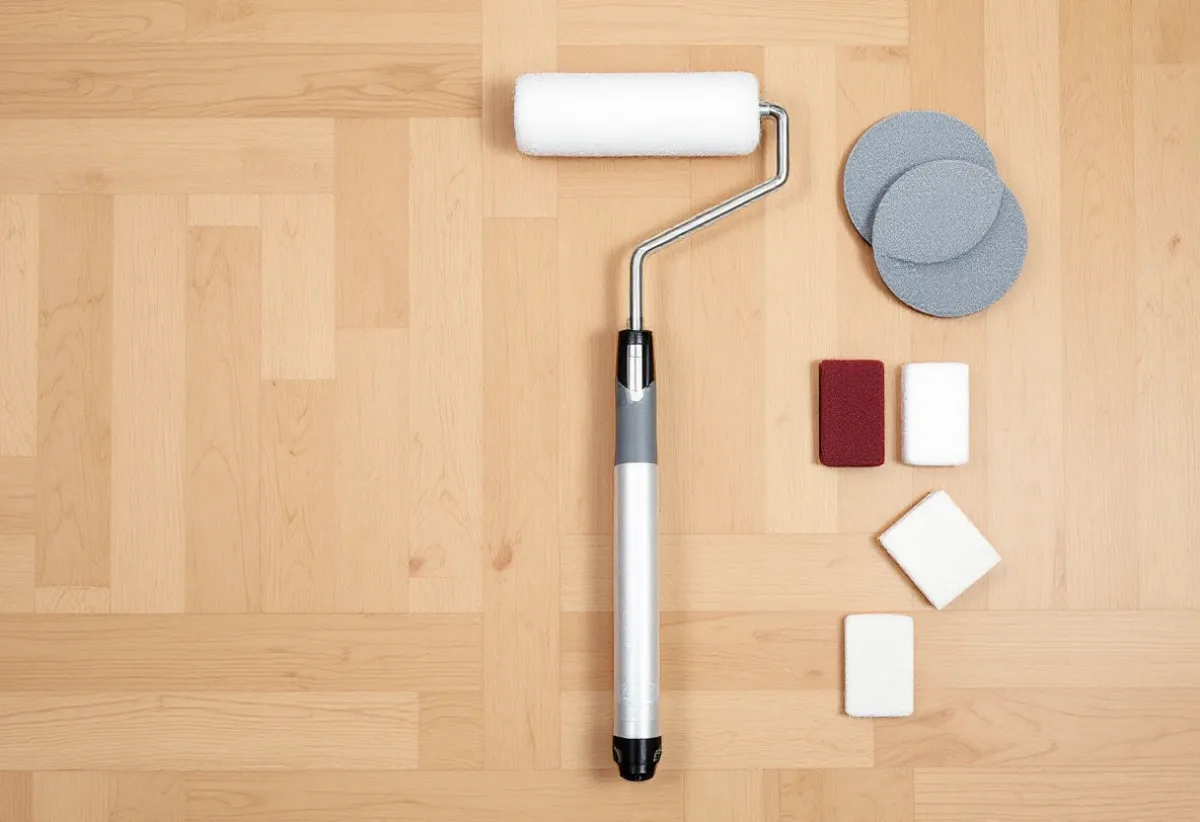
For a screen and recoat, start with a fine 220 grit screen (or 240) and only step down to 180, then 150, if the old finish will not dull evenly. A maroon pad, about 320 grit, is the gentle option for between coats, softer finishes and LVP. That is the manufacturer's advice: start light, then get more aggressive only if you have to. Going too coarse takes color off the boards and eats into the floor. Here is how to choose, what you are looking for and how to handle the dust.
What screening is for
Screening is not sanding. A full sand cuts through the old finish and into the wood. A screen only roughens the top of the old finish, so the new coat has something to grip.
That is why a recoat uses fine grits. You want thousands of tiny scratches in the finish, evenly across the whole floor. You do not want to reach the wood.
Grit numbers work like sandpaper. A higher number is finer. A lower number is coarser and cuts harder. A 220 screen is gentler than a 150.
Start at 220, then step down only if you need to
Begin with a 220 screen, or a 240. Run a test area and look at it.
- Is the old coat powdering? You want a fine white dust coming off the screen.
- Is the surface turning an even, ultra matte look? That flat, dull look is what you want across the whole floor.
- If both are yes, stay at 220 and screen the whole floor.
- If the finish is not dulling, step down to 180 and check again.
- Still not dulling? Go to 150. Do not go coarser than you need to.
Why too aggressive is a problem
A coarse screen on a recoat does more harm than good. It can take color off the planks, and it eats into the floor itself.
On a stained floor, that shows up as light patches where the color was cut away. On engineered wood, the real wood top layer can be thin, and you cannot put it back.
Starting fine costs you a few minutes. Starting coarse can cost you the floor.
When to use a maroon pad instead
A maroon pad, about 320 grit, is gentler than any screen. Think of it as the fail-safe.
- Between coats, when a floor is getting a second coat.
- On softer existing coatings that a screen would cut too fast.
- On LVP: a maroon pad, one coat. Test a spot first.
Floor by floor
The grit is only part of it. How you screen changes with the floor.
- Site-finished solid hardwood: start at 220 and work the whole floor until it is evenly dull.
- Factory-prefinished: the factory finish is very hard. Screen slower and more thoroughly so the new coat grips.
- Engineered: screen gently, and never use a metal mesh screen. Pull a vent first to see how thick the wood layer is.
- Old oil-based finish: fine once screened. The dust comes off amber.
- Peeling from a bad past job: scrape the loose finish first, then wet-screen.
The buffer
Screens run on a circular floor buffer, 16 or 17 inches across, at a slow speed of about 175 RPM. The driver pad holds the screen flat against the floor. You walk it across the room, side to side, guiding it with the handle.
The buffer cannot reach into corners or tight against the baseboards. Do those by hand with a trim pad, so the edges are as dull as the middle of the room. An edge you missed is an edge where the new coat grips less.
Screens wear out as you use them. They load up with finish dust and stop cutting evenly. Plan to go through screens on every job.
Read the dust as you go
The dust is your gauge. Check it in the first few passes and keep checking.
- Fine white powder: a cured finish that will bond.
- Amber: an old oil-based finish, fine to coat.
- Brown: paint. Stop.
- The screen glides, smears or the finish peels in sheets: stop. That floor needs a full sand.
Plan for the dust
Screening makes a lot of fine dust, and it is in the customer's home. Never tell a homeowner it is dust-free.
The manufacturer warns that operators who screen with a bare buffer and no dust control are often caught off guard. The minimum fix is a backpack vacuum that hooks to the buffer. Make dust control part of your setup from your first job.
After screening, vacuum the floor and the baseboards, then tack the floor with a slightly damp mop. Any dust left under the coat shows up as bumps, and it cannot come out once the finish is down.
Common questions
- What grit screen do you use for a screen and recoat?
- Start with 220 (or 240). If the old finish will not dull evenly, step down to 180, then 150. Use the finest grit that gets the whole floor evenly dull.
- What is a maroon pad used for on hardwood floors?
- A maroon pad is about 320 grit, gentler than a screen. Use it between coats, on softer existing coatings and on LVP.
- How do you know you have screened enough?
- The whole floor has an even, dull, ultra matte look and the screen throws off a fine white powder. Shiny spots mean those areas need another pass.
- Do you need a drum sander for a recoat?
- No. A drum sander is for a full sand and refinish, and it takes wood off the floor. A recoat only needs a buffer with a fine screen or pad.
- Does screening a floor make dust?
- Yes, a lot of fine dust. Use a backpack vacuum hooked to the buffer, then vacuum and tack the floor before the coat goes on.
Ready to bring the recoat to your city?
One partner per area. Check if yours is open.
More Insights
How Many Homes Have Hardwood Floors? What It Means for a Recoat Business
October 17, 2026
A Home Service Business That Stays Busy in Winter: 5 Years of Data
October 17, 2026
Hardwood Floor Demand Calculator: How to Read Your Area's Report
October 17, 2026
An Add-On Service for Home Service Companies: Why Owners Add Recoats
October 17, 2026
How to Recoat Hardwood Floors, Step by Step: All 7 Stages of a Job
October 17, 2026
Facebook Ads for Flooring: Cost per Lead, per Estimate and per Job
October 17, 2026