
How to Test if a Floor Can Be Recoated: Adhesion Tests Before You Quote
October 23, 2026 · FloorIt Insights
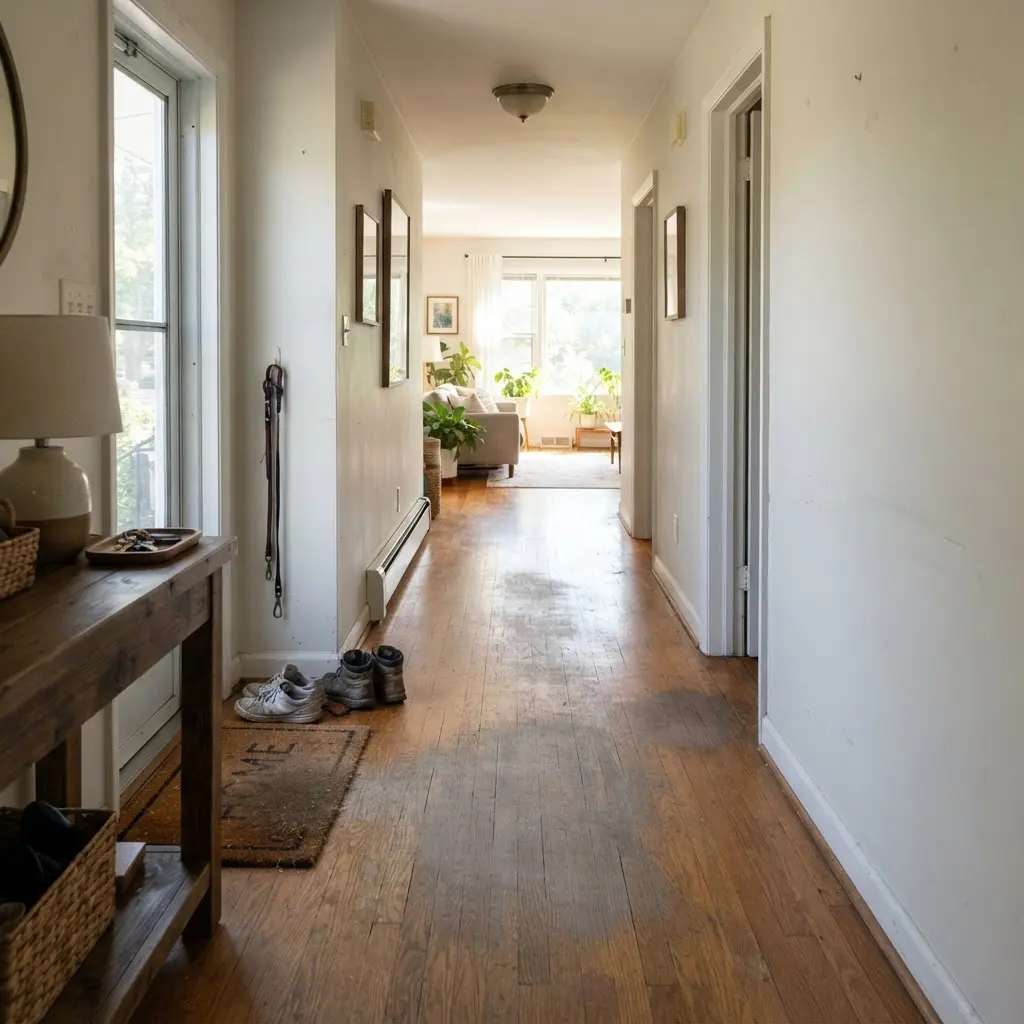
To test if a floor can be recoated, check that it is a floor with a sound finish on top, test a hidden spot for wax and polish, then scuff it and press tape on it to see if the old finish holds. On job day, the dust off the screen tells you the rest. A recoat only works if the new coat has something solid to grip. These tests tell you that before you quote, not after the coat peels.
Why adhesion is the whole job
A recoat does not bond to the wood. It bonds to the finish that is already on the floor. The buffer and screen put thousands of tiny scratches in that old finish, and the new coat flows into them and grabs on.
So the question is never just "is this a wood floor?" The question is whether the layer on top is a cured, clean finish that is stuck down hard. If it is, the new coat becomes part of the floor. If it is not, the new coat is only as good as whatever it sits on.
When a recoat fails, it is almost always one of two things: someone skipped the wax and polish test, or the floor was not screened evenly. Both are avoidable.
Step 1: what kind of floor is it?
Start with the floor itself. Each type has a finish layer on top, and each one needs a slightly different prep.
- Solid hardwood with a finish applied on site: the classic recoat.
- Engineered hardwood: a real wood top layer over plywood. Pull a floor vent to see the layers. Screen gently.
- Factory-prefinished: a very hard factory finish. Screen slower and more thoroughly so the coat grips.
- LVP: it has a wear layer on top. Test a spot first.
- Laminate, sheet vinyl and painted floors: not recoated with this finish.
Step 2: look for gray wood and deep damage
Walk every room in good light. Look hard at the walkways and the spots in front of doors and furniture.
Gray, bare wood means the finish is worn all the way through. There is nothing left to bond to, and the wood itself is damaged. That floor needs a full sand. Pass on it or refer it.
Finish worn into the color, but not through to gray wood, can often be saved. Those traffic lanes get a color touch-up before the coat.
Deep gouges and holes stay visible under a clear coat. Stains soaked into the wood, like old pet stains, stay visible too. An amber-tinted version of the finish can help blend stains. Tell the homeowner what the floor will look like after, before you quote.
Step 3: test for wax and polish
Pick a hidden spot, like the back of a closet. Wax, polish and oily residue all block a new coat. The finish's data sheet warns that if they are left on the floor, 'adhesion failure can occur'.
- Ask what they clean with. Shine products, restorers, oil soap and wax are all red flags.
- Emulsifier test: a few drops of polish remover. If it turns milky, there is polish.
- Wax test: mineral spirits on a white rag. If wax comes up on the rag, there is wax.
Step 4: the tape test
This is the adhesion test itself. It shows whether the old finish is stuck to the floor hard enough to hold a new coat.
- Scuff a small spot in a hidden area, the way the screen will on job day.
- Press a strip of strong tape down firmly over it.
- Pull it up fast.
- Check the tape. Clean tape means the old finish is holding. Flakes of finish on the tape mean it is letting go.
The cross-hatch version
A stricter version is the cross-hatch tape test, the method behind the ASTM D3359 adhesion standard. You cut a small grid of lines through the coating with a blade, press tape over the grid and pull it off. Then you look at how many of the little squares came up with the tape.
It is a good way to see the bond for yourself. Try it on a sample board: screen half of it, coat the whole board, let it cure and run the test on both halves. On the screened half, the tape should pull nothing off. That is the bond half of Lock & Bond in one picture.
Step 5: read the screen dust on job day
The last test happens when the buffer starts. The dust the screen throws off tells you what the old finish is.
- Fine white powder: a cured finish that will bond. Keep going.
- Amber dust: an old oil-based finish. That is fine once it is screened.
- Brown dust: paint. Stop.
- The screen glides, smears or the finish peels in sheets: stop. That floor needs a full sand.
What the results mean
Most failed tests add a step. They do not end the job.
- Wax or polish: strip it, deep clean, then screen.
- Peeling from a bad past job: scrape the loose finish, wet-screen, clean, then coat.
- Fresh oil-based finish less than 30 days old: wait.
- Tape pulls finish up across the floor, or the finish peels in sheets: full sand, not a recoat.
- Not sure: send photos. FloorIt partners with a flooring company, and partners get told the product and the steps for any floor they are unsure about.
Common questions
- How do you know if a hardwood floor can be recoated?
- The finish on top must be cured, clean and stuck down hard. Check for gray bare wood, test a hidden spot for wax and polish, then scuff it and do a tape test. A fine white powder off the screen on job day confirms it.
- What is the most common reason a recoat peels?
- Skipping the wax and polish test, or not screening the whole floor evenly. Both leave the new coat with nothing solid to grip.
- Can you recoat a floor worn down to bare wood?
- No. Gray, bare wood has no finish left for the new coat to bond to. That floor needs a full sand and refinish.
- Can a floor that failed the polish test still be recoated?
- Usually, yes. Strip the polish with a polish and wax remover, deep clean, then screen and coat it like any other floor.
Ready to bring the recoat to your city?
One partner per area. Check if yours is open.
More Insights
How Many Homes Have Hardwood Floors? What It Means for a Recoat Business
October 17, 2026
A Home Service Business That Stays Busy in Winter: 5 Years of Data
October 17, 2026
Hardwood Floor Demand Calculator: How to Read Your Area's Report
October 17, 2026
An Add-On Service for Home Service Companies: Why Owners Add Recoats
October 17, 2026
How to Recoat Hardwood Floors, Step by Step: All 7 Stages of a Job
October 17, 2026
Facebook Ads for Flooring: Cost per Lead, per Estimate and per Job
October 17, 2026