
Can You Recoat Over Floor Polish? Why Store Polish Blocks a Recoat
October 23, 2026 · FloorIt Insights
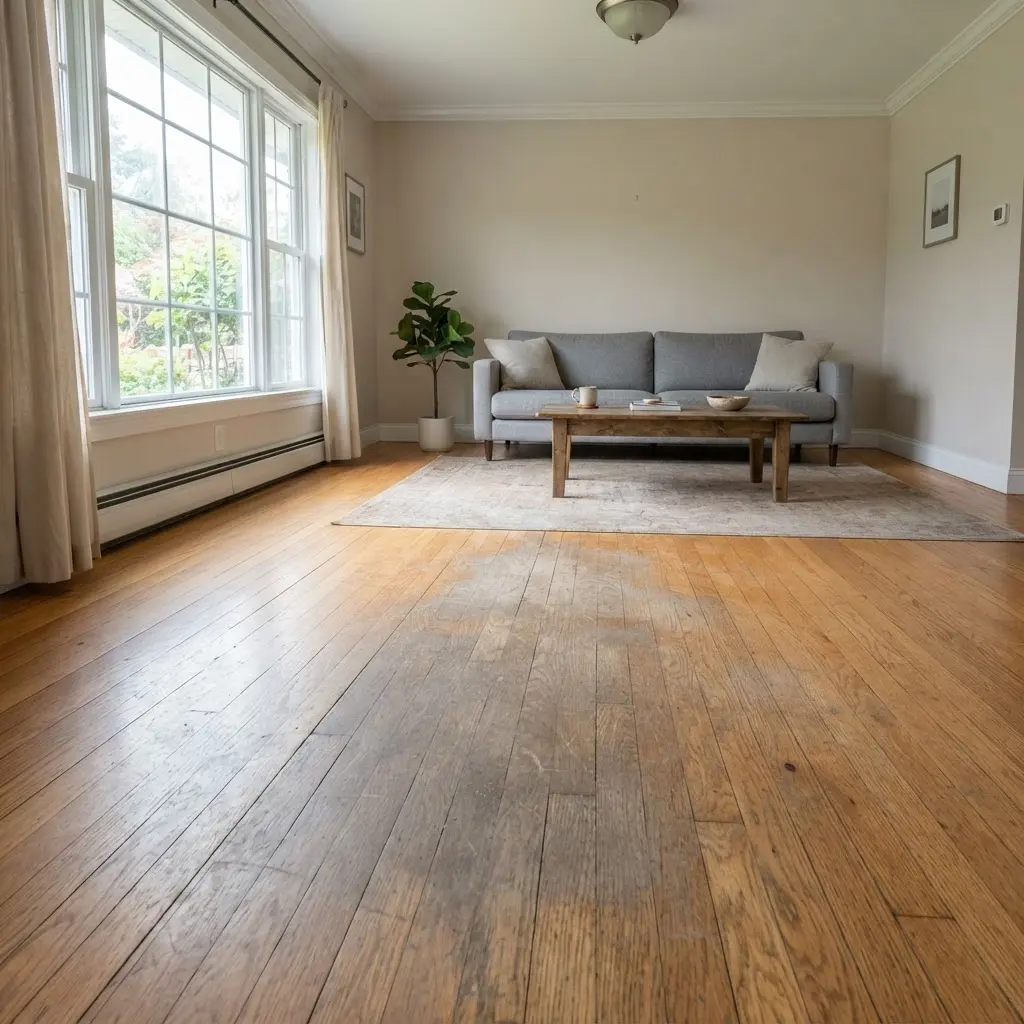
No. You cannot lay a real floor finish on top of floor polish, because the new coat cannot bond through the polish film. The finish's data sheet says it plainly: the floor must be free of wax, polish and oily residue, or 'adhesion failure can occur'. A polished floor is not always a lost job, though. You test for the polish, strip it off, then screen and coat the floor like any other. Here is how.
What store polish actually is
Store polish and mop-on restorers are not floor finish. They leave a thin film of acrylic and wax on top of the floor. One popular hardwood floor polish lists acrylic copolymers, urethane and polyethylene wax on its label.
That film looks good at first. The floor shines again, which is why so many homeowners try it. Then it scuffs, softens and builds up. Some homeowners put on coat after coat for years, and every coat adds to the pile.
The key point is that polish never cures. It dries on top and stays a separate layer. That is also why the maker of that same polish sells a polish remover to take the buildup off.
Most people know floor products from the store aisle. Those are polishes, a different thing from the two-part finishes flooring pros lay down.
Why polish blocks a recoat
A recoat works because the new coat bonds into the old, cured finish. The buffer and screen roughen the old finish, and the new coat grips into those scratches and becomes part of the floor.
Polish gets in the way of that. If there is a polish film between the old finish and the new coat, the new coat grips the polish, not the finish. The polish was never stuck down hard in the first place. When it lets go, your new coat goes with it. That is a peeling floor and a free redo.
When a recoat fails, it is almost always one of two things. Someone skipped the test for wax or polish, or the floor was not screened evenly. Those are the two things FloorIt training drills hardest.
How to find polish before you quote
Test in a hidden spot, like the back of a closet, at the estimate. It takes a few minutes and saves the whole job.
- Ask what they clean with. On the phone and again at the estimate, ask what the homeowner has used on the floor. Shine products, restorers, oil soap and wax all count. Many will tell you straight out.
- Look at the floor. A cloudy, uneven or peeling film is a warning sign.
- Run the emulsifier test. Put a few drops of polish remover on the spot. If it turns milky, there is polish on the floor.
- Run the wax test. Rub the spot with mineral spirits on a white rag. If wax comes up on the rag, there is wax on the floor.
How to strip it off
A failed polish or wax test does not end the job. It adds a step at the front of it.
- Strip it. Take the polish or wax off with a floor polish and wax remover. The FloorIt kit ships with a gallon of it.
- Deep clean. Go over the floor with a prep cleaner, so no residue is left behind.
- Screen. Buff with a screen until the whole floor is evenly dull. Watch the dust. A fine white powder means you are down to a cured finish that will bond.
- Vacuum, tack and coat. Vacuum the floor and the baseboards, go over it with a slightly damp mop, then mix and roll on the finish.
Charge for it
Stripping polish is real work, so put it on the quote as extra prep, in writing, before job day. The homeowner already knows the floor has a problem. They are the one who tried to fix it with a bottle from the store.
Tell them why it matters. A new coat over polish peels. A new coat over a stripped, screened floor bonds. Most homeowners would rather pay for the step than pay for the job twice.
When stripping is not enough
Polish can hide what is under it. After you strip, look again.
- Gray, bare wood where the finish is worn through. That floor needs a full sand, not a recoat.
- Finish that glides, smears or peels up in sheets under the screen. Stop. That floor needs a full sand.
- Brown dust off the screen. That means paint, and paint is not recoated.
- Not sure? Take clear photos and send them in. FloorIt partners with a flooring company, and partners send photos of any floor they are unsure about.
Keep it from coming back
The homeowner who used polish once will reach for it again unless you tell them not to. Give them the care list in writing before you leave.
- Clean with the pH-neutral citrus floor cleaner you leave with every job. No rinse, no residue.
- Never use store shine products, oil soap, steam mops or vinegar.
- Rugs on the busiest walkways and felt pads under the furniture.
Common questions
- Can you screen floor polish off?
- Strip it first. Use a floor polish and wax remover, deep clean, then screen. Screening is the step that gets the cured finish ready to bond, and it comes after the polish is gone.
- Does floor polish ruin a hardwood floor?
- It does not ruin the wood. It leaves a film that builds up and blocks a new coat from bonding. Once it is stripped off, a floor with sound finish under it can usually be recoated.
- How do I know if my floor has polish on it?
- Put a few drops of polish remover in a hidden spot. If it turns milky, there is polish. A cloudy, uneven or peeling film and a homeowner who has used shine products are both warning signs.
- Will a two-part finish peel like polish does?
- Not when the floor is prepped right. Polish dries on top and never cures. A two-part finish cures hard and bonds into the screened finish, so it becomes part of the floor.
Ready to bring the recoat to your city?
One partner per area. Check if yours is open.
More Insights
How Many Homes Have Hardwood Floors? What It Means for a Recoat Business
October 17, 2026
A Home Service Business That Stays Busy in Winter: 5 Years of Data
October 17, 2026
Hardwood Floor Demand Calculator: How to Read Your Area's Report
October 17, 2026
An Add-On Service for Home Service Companies: Why Owners Add Recoats
October 17, 2026
How to Recoat Hardwood Floors, Step by Step: All 7 Stages of a Job
October 17, 2026
Facebook Ads for Flooring: Cost per Lead, per Estimate and per Job
October 17, 2026